- A forex trading course teaches you how currency markets work, how to read charts, and how to manage risk before you trade with real money.
- Beginners should start with the basics currency pairs, pips, leverage, and spreads before touching a live account.
- Forex trading for beginners works best when you combine structured lessons with demo account practice.
- Forex investment through currency trading carries real risk; no course can guarantee profits.
- Look for UK-based training providers who are transparent about risk and don't promise "guaranteed returns."
- A good course covers technical analysis, fundamental analysis, risk management, and trading psychology.
- Learn To Trade offers structured forex education designed to build practical, real-world trading skills.
Introduction
If you've ever watched the pound, dollar, or euro move on the news and wondered how people actually make money from those swings, you're not alone. Forex short for foreign exchange is the world's biggest financial market, and more people across the UK are looking at it as a way to build financial skills and potentially grow their money.
But here's the thing: forex trading isn't something you should jump into blind. That's where a proper forex trading course comes in. It gives you a structured way to learn the ropes, understand the risks, and build confidence before you put real money on the line.
This guide walks you through what forex trading courses actually teach, who they're for, and how to pick one that's worth your time.
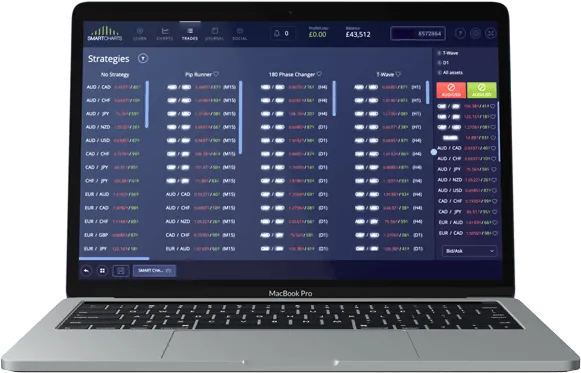
Forex trading strategies are rule-based approaches for deciding when to buy or sell a currency pair. Popular types include day trading, swing trading, scalping, and position trading each suited to different time commitments and risk levels. Beginners should start with one simple, well-tested strategy, practise it on a demo account, and pair it with solid risk management before trading real money.
What Are Forex Trading Strategies?
A forex trading strategy is a set of rules that tells you when to enter a trade, when to exit, and how much to risk. Strategies are usually built around either:
- Technical analysis — using charts, patterns, and indicators to predict price movement
- Fundamental analysis — using economic news, interest rates, and events to predict currency direction
- A combination of both — which many experienced traders eventually use
Without a strategy, trading becomes guesswork. With one, you have a repeatable process you can test, refine, and improve over time.
Why Do Traders Need a Strategy?
- Consistency — removes emotional, in-the-moment decision-making
- Measurability — you can track whether your approach actually works over time
- Risk control — a good strategy always includes rules for managing losses
- Confidence — knowing your plan reduces panic during volatile market moves
Who Should Use Each Type of Strategy?
Different strategies suit different lifestyles. Here's a quick breakdown:
| Strategy | Time Commitment | Best Suited For |
|---|---|---|
| Scalping | Very high (minutes per trade) | Full-time traders, fast decision-makers |
| Day Trading | High (hours per day) | People who can watch markets during the day |
| Swing Trading | Moderate (checked daily) | Those with full-time jobs, limited daytime access |
| Position Trading | Low (weekly/monthly checks) | Long-term thinkers, patient investors |
Common Forex Trading Strategies Explained
1. Day Trading
Day traders open and close positions within the same day, avoiding overnight risk. This strategy requires focus, quick decision-making, and the ability to monitor markets during trading sessions.
2. Swing Trading
Swing trading holds positions for several days to weeks, aiming to capture medium-term price moves. It's popular with beginners in the UK because it doesn't require watching screens all day — ideal alongside a full-time job.
3. Scalping
Scalping involves making dozens of small trades throughout the day, aiming for tiny profits on each one. It's high-intensity and generally not recommended for beginners due to the speed and discipline required.
4. Position Trading
Position traders hold trades for weeks, months, or even longer, focusing on long-term trends driven by economic fundamentals rather than short-term price noise.
5. Trend Following
This strategy involves identifying an established market direction and trading in that direction, using tools like moving averages to confirm the trend.
6. Range Trading
Range trading works when a currency pair moves sideways between clear support and resistance levels, buying near support and selling near resistance.
How Do You Choose the Right Strategy?
Ask yourself these questions before picking a strategy:
- How much time can I realistically dedicate each day?
- Can I handle fast-paced decision-making, or do I prefer a slower pace?
- What's my risk tolerance — can I stomach short-term volatility?
- Do I have a full-time job that limits when I can watch the markets?
For most people starting to trade forex, swing trading or simple trend-following strategies offer the best balance of manageable time commitment and learning opportunity.
When Should You Apply a Trading Strategy?
Timing matters within a strategy, not just around it. Most strategies work best when applied:
- During active market sessions (London and New York overlap tends to have higher volatility)
- Around key economic news releases, if your strategy is fundamentals-based
- Consistently — switching strategies frequently based on short-term results usually backfires
Where Do Traders Practise Strategies Before Going Live?
Before risking real money, most UK traders test their strategies using:
- Demo accounts offered by FCA-regulated brokers
- Backtesting tools that apply a strategy to historical price data
- Trading journals to track performance and refine the approach over time
Risk Management: The Non-Negotiable Part of Any Strategy
No strategy works without proper risk management. This includes:
- Setting a stop-loss on every trade
- Risking only a small percentage of your account per trade (many experienced traders risk 1–2%)
- Using a favourable risk-to-reward ratio, so winning trades outweigh losing ones
- Avoiding emotional decisions like moving stop-losses further away after a trade goes wrong
Expert Insight
One pattern shows up again and again among traders who struggle: strategy-hopping. They try a strategy for a few days, don't see instant results, and jump to something new — never giving any single approach enough time to prove itself. Experienced traders tend to do the opposite: they pick one strategy, backtest it thoroughly, trade it on a demo account for weeks, and only then commit real capital. The strategy itself matters less than the discipline to actually follow it consistently.
Forex Trading for Beginners: Building Your First Strategy
If you're new to trading, keep it simple:
- Pick one strategy type (swing trading is a common beginner-friendly starting point)
- Learn the specific rules — entry signals, exit signals, stop-loss placement
- Practise on a demo account for several weeks minimum
- Keep a trading journal to track what's working and what isn't
- Only move to a live account once you're consistently following your rules
A structured forex trading course can help fast-track this process by teaching strategy fundamentals alongside proper risk management from day one.
Common Mistakes When Using Forex Trading Strategies
- Using a strategy without understanding why it works
- Ignoring risk management rules when a trade "feels right"
- Switching strategies too often without giving any one a fair test
- Overcomplicating things with too many indicators at once
- Not adapting a strategy when market conditions clearly change
Final Thoughts
There's no shortcut to finding the "perfect" forex trading strategy because it doesn't exist. What works is finding an approach that matches your lifestyle and risk tolerance, testing it properly, and applying it with discipline. Whether you lean toward swing trading, trend following, or something else entirely, the strategy is only as good as the risk management and consistency behind it.
If you want to build this foundation properly, structured education is the most reliable starting point for learning to trade forex with confidence.
FAQs
1. What is the best forex trading strategy for beginners?
Swing trading is often recommended for beginners since it doesn't require constant screen-watching and gives more time to analyse each trade.
2. How many forex trading strategies should I learn?
Start with one. Mastering a single strategy is far more valuable than knowing several you don't fully understand.
3. Can I use the same strategy for all currency pairs?
Not always some strategies work better on major pairs with high liquidity, while others suit more volatile or exotic pairs.
4. How long does it take to test a forex trading strategy?
Most traders backtest and demo trade a strategy for at least several weeks before considering it reliable.
5. Is scalping a good strategy for beginners?
Generally not scalping requires fast decision-making and high focus, which is challenging without prior trading experience.
6. Do forex trading strategies guarantee profits?
No. Strategies improve consistency and structure, but all trading carries risk, and losses are a normal part of the process.
7. What's the difference between technical and fundamental strategies?
Technical strategies rely on chart patterns and indicators, while fundamental strategies are based on economic data and news events.
8. Can I combine multiple forex trading strategies?
Yes, many experienced traders blend technical and fundamental analysis, but beginners should master one approach first.
9. How do I know if my strategy isn't working?
Track results in a trading journal consistent losses over a meaningful sample size (not just a few trades) signal it's time to review the approach.
10. Where can I learn forex trading strategies properly?
A structured forex trading course that combines theory with demo practice is the most effective way to learn strategy application safely.
Comments
Post a Comment